
Young people are full of potential. They possess ideas, creativity, energy, ambition, and the ability to contribute meaningfully to their families, communities, and society. However, potential alone does not always translate into achievement. Young people need guidance, encouragement, knowledge, opportunities, and positive examples to help them navigate the journey from potential to purpose.
This is where mentorship becomes incredibly important.
Mentorship is more than simply giving advice. It is about building meaningful relationships in which an experienced or knowledgeable person supports another person in their personal, educational, professional, and sometimes emotional development. A good mentor helps a young person understand their strengths, identify areas for growth, make better decisions, overcome challenges, and develop the confidence to pursue their goals.
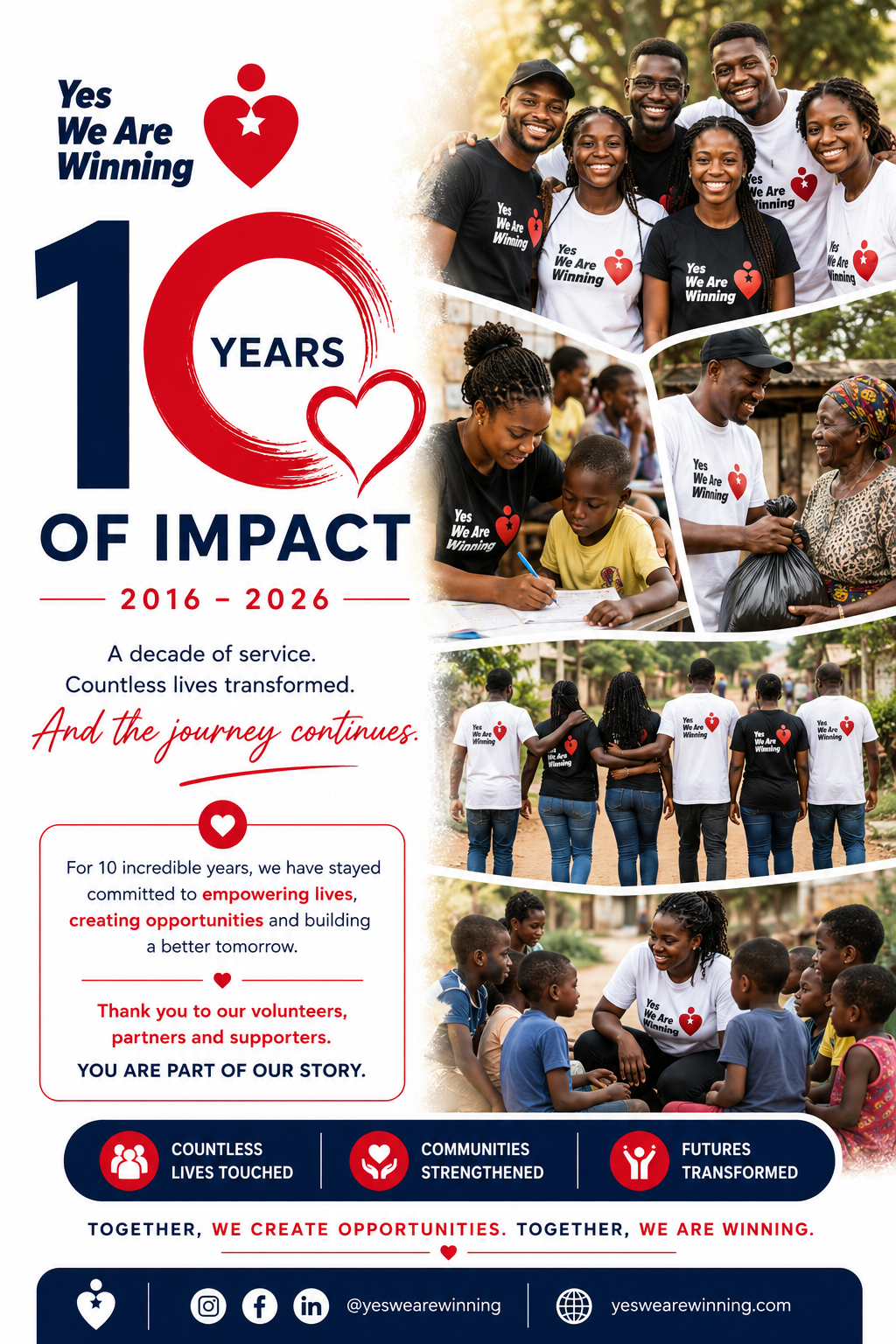
At Yes, We Are Winning Foundation (YWAW), mentorship is closely connected to our commitment to encourage, educate and empower people to discover their potential and pursue excellence. We believe that when young people have access to the right guidance and opportunities, they can develop the mindset and skills needed to become positive contributors to society.
What Is Mentorship?
Mentorship is a developmental relationship between two people where one person provides guidance, knowledge, encouragement, and support to another.
A mentor does not necessarily have to be someone who has achieved everything in life. What matters is that the mentor has valuable experience, knowledge, character, or skills that can help someone else grow.
For a young person, a mentor could be:
- A teacher who recognizes their potential.
- A professional who guides them in their chosen career.
- A community leader who encourages them to serve others.
- An entrepreneur who teaches them about business and responsibility.
- A trusted adult who helps them navigate important life decisions.
- Someone who has overcome challenges similar to those they are currently facing.
Effective mentorship is not about creating a copy of the mentor. Instead, it is about helping young people become the best version of themselves.
Why Do Young People Need Mentors?
Growing up comes with many questions.
What career should I pursue?
What am I good at?
How do I make the right decisions?
How do I handle failure?
How do I develop useful skills?
How do I recognize opportunities?
How do I overcome setbacks?
Young people often have to make important decisions before they have enough experience to fully understand their consequences.
A mentor can provide perspective.
Rather than allowing young people to navigate every challenge alone, mentorship gives them someone they can learn from and someone who can help them think through difficult situations.
1. Mentorship Helps Young People Discover Their Potential
One of the greatest benefits of mentorship is helping young people recognize abilities they may not see in themselves.
Sometimes, a young person may have a particular talent but lack the confidence to develop it. They may be academically capable but unsure about their future. They may have entrepreneurial ideas but not know where to begin.
A good mentor can identify strengths, ask the right questions, provide constructive feedback, and encourage the young person to explore their possibilities.
When someone believes in a young person’s potential, that belief can become an important source of motivation.
2. Mentorship Builds Confidence
Confidence does not always come naturally.
Many young people struggle with self-doubt, fear of failure, comparison with others, or uncertainty about their abilities.
Mentorship can provide a safe environment where young people can ask questions, make mistakes, learn, and try again.
A mentor can remind them that failure is not necessarily the opposite of success. Sometimes, failure is part of the process of learning how to succeed.
Through consistent encouragement and constructive feedback, young people can gradually develop greater confidence in their abilities and decisions.
3. Mentorship Provides Guidance During Critical Decisions
Young people make decisions that can significantly influence their future.
Choices about education, career, friendships, finances, personal development, and lifestyle can have long-term consequences.
A mentor can help a young person consider different possibilities before making important decisions.
Instead of simply saying, “Do this,” an effective mentor helps the mentee understand why a particular decision may be beneficial and encourages them to develop their own ability to make sound decisions.
This teaches something even more valuable than the immediate advice: critical thinking.
4. Mentorship Supports Educational Development
Education is one of the strongest tools for transforming lives, but academic success involves more than attending school.
Young people may need guidance on study habits, career choices, goal setting, scholarship opportunities, professional development, and continuing education.
A mentor can help them understand how their education connects to their future aspirations.
For example, a mentor could encourage a student who is interested in technology to explore programming, participate in relevant projects, develop digital skills, and learn about potential career paths.
In this way, mentorship can help turn education from simply acquiring qualifications into a pathway for personal and professional development.
5. Mentorship Encourages Career Development
The transition from education to employment can be challenging.
Many young people graduate with academic qualifications but have limited knowledge about workplace expectations, professional communication, networking, personal branding, entrepreneurship, or career progression.
Mentors with professional experience can help bridge this gap.
They can share practical knowledge about their industries, review CVs, discuss career options, explain workplace etiquette, provide constructive feedback, and introduce young people to useful opportunities and networks where appropriate.
This type of guidance can help young people approach their careers with greater preparation and confidence.
6. Mentorship Teaches Life Skills
Success is not determined by academic qualifications alone.
Young people also need practical life skills such as:
- Communication
- Leadership
- Time management
- Problem-solving
- Financial responsibility
- Emotional resilience
- Teamwork
- Decision-making
- Adaptability
- Goal setting
Mentorship creates opportunities for these skills to be learned through real conversations and experiences.
A mentor can share lessons from personal successes and failures, helping young people understand what textbooks sometimes cannot teach.
7. Mentorship Creates Positive Role Models
Young people learn not only from what people tell them but also from what they observe.
Having positive role models can influence how young people think about responsibility, leadership, work, integrity, service, and success.
A mentor who demonstrates discipline, honesty, resilience, compassion, and commitment can provide a practical example of the values they encourage in others.
This is particularly important because young people are constantly exposed to different definitions of success.
Mentorship can help them understand that genuine success is not only about wealth, status, or recognition. It can also involve character, contribution, purpose, and positive impact.
8. Mentorship Helps Young People Navigate Failure
Failure can be discouraging, especially when someone is young and still developing their understanding of themselves.
A failed examination, rejected application, unsuccessful business idea, or missed opportunity can sometimes feel like the end of the road.
A mentor can provide perspective.
They can help a young person ask:
What happened? What can I learn? What can I do differently next time?
This approach transforms failure from a source of shame into an opportunity for growth.
Resilience is developed when people learn that setbacks do not have to define their future.
9. Mentorship Encourages a Winning Mindset
A winning mindset does not mean believing that you will always win.
It means developing the attitude to keep learning, improving, adapting, and moving forward despite challenges.
This is particularly important in a world where young people face increasing competition, uncertainty, social pressure, and rapidly changing opportunities.
A mentor can encourage young people to replace limiting beliefs with a healthier approach to growth:
I may not know how yet, but I can learn.
I may have failed, but I can try again.
I may not have everything I need today, but I can develop what I need for tomorrow.
This mindset encourages perseverance and personal responsibility.
The Role of Mentorship in Community Development
The impact of mentorship extends beyond the individual.
When young people develop skills, confidence, character, and a sense of responsibility, they are better positioned to contribute to their communities.
A young person who receives positive mentorship today can become a mentor tomorrow.
This creates a cycle of knowledge, opportunity, and empowerment.
Imagine a student who receives educational guidance, develops confidence, gains professional skills, and eventually becomes a successful professional. That individual can later return to their community to mentor other young people.
One relationship can therefore influence many lives over time.
This is why mentorship should not be viewed simply as an individual development initiative. It is an investment in the future of communities.
Mentorship and Empowerment
Mentorship and empowerment are closely connected.
Empowerment is not simply giving someone something. It is helping them develop the knowledge, skills, confidence, and resources necessary to take greater responsibility for their own future.
A mentor can empower a young person by teaching rather than doing everything for them.
For example, instead of solving every problem for a mentee, a mentor can ask:
“What do you think we should do?”
“What options have you considered?”
“What would you do differently?”
These questions encourage independent thinking.
The goal is not to create dependency. The goal is to help young people become capable of navigating challenges independently.
What Makes a Good Mentor?
Effective mentorship requires more than experience.
A good mentor should demonstrate:
Listening
Young people need someone who will genuinely listen to their concerns, ideas, questions, and aspirations.
Patience
Growth takes time. A mentor should understand that development does not happen overnight.
Honesty
Young people need constructive feedback, not just praise. A good mentor should be willing to point out areas that need improvement while doing so respectfully.
Encouragement
A mentor should help young people recognize progress and remain motivated when things become difficult.
Integrity
A mentor’s actions should reflect the values they teach.
Consistency
Trust develops through reliability. A mentor who consistently shows up, communicates, and follows through can have a lasting influence.
Respect
Young people should be treated as individuals with their own ideas, personalities, aspirations, and experiences.
Young People Also Have Something to Teach
Mentorship should not always be viewed as a one-way relationship.
While mentors provide experience and guidance, young people bring their own perspectives, creativity, ideas, technological knowledge, and experiences.
This means mentorship can become a two-way learning relationship.
Older generations can learn from younger people just as younger people can learn from those who came before them.
When generations learn from one another, communities become stronger.
How Organizations Can Support Mentorship
Organizations, schools, NGOs, businesses, churches, community groups, and other institutions can play an important role in creating mentorship opportunities.
Effective programmes can include:
- Career mentorship sessions
- Educational mentorship
- Leadership development
- Entrepreneurship mentorship
- Skills-development programmes
- Professional networking
- Scholarship support
- Workshops and seminars
- One-on-one mentoring
- Group mentoring
- Community service opportunities
However, successful mentorship programmes should focus on meaningful relationships rather than simply organizing occasional motivational events.
Young people need opportunities to ask questions, receive guidance, develop skills, and build relationships over time.
Becoming a Mentor
You do not need to be famous, wealthy, or highly accomplished to mentor someone.
You simply need knowledge, experience, willingness to help, and a genuine desire to see someone else grow.
You could mentor a student in a subject you understand. You could guide someone who wants to enter your profession. You could teach a young entrepreneur something you have learned through experience.
Sometimes, what feels like ordinary knowledge to you may be extremely valuable to someone who is just beginning their journey.
Your experience could help someone avoid a mistake.
Your encouragement could help someone continue.
Your advice could help someone recognize an opportunity.
Your example could help someone understand what responsible leadership looks like.
Becoming a Better Mentee
Mentorship also requires responsibility from the person being mentored.
Young people can make the most of mentorship by:
- Being willing to learn.
- Asking questions.
- Listening to constructive feedback.
- Taking initiative.
- Setting personal goals.
- Applying what they learn.
- Being respectful of their mentor’s time.
- Taking responsibility for their decisions.
- Remaining open to new perspectives.
- Sharing their progress and challenges honestly.
A mentor can open a door, but the mentee must be willing to walk through it.
Building a Future Through Mentorship
The future of any society depends significantly on the people being developed today.
Young people will become tomorrow’s teachers, entrepreneurs, professionals, leaders, innovators, parents, community builders, and change-makers.
If we want a better future, we must invest in them.
Mentorship provides one powerful way to do this.
It gives young people access to knowledge.
It provides guidance when the path is uncertain.
It encourages them when challenges arise.
It challenges them when they need to grow.
It helps them recognize their potential.
And, most importantly, it reminds them that their future can be bigger than their present circumstances.
At YWAW, We Believe in the Power of People
At Yes We Are Winning Foundation, we believe that people can be encouraged, educated, and empowered to discover their potential and pursue excellence.
Mentorship is an important part of that journey because meaningful development does not happen in isolation.
When we guide young people, we are not simply helping them achieve individual goals. We are helping to build individuals who can contribute positively to their families, communities, workplaces, and society.
Every young person deserves the opportunity to learn, grow, dream, and become.
And sometimes, the difference between a young person who gives up and one who keeps going is having someone who says:
“I believe in you. Keep going.”
Mentorship matters because people matter.
Young people need more than opportunities. They need guidance on how to recognize and use those opportunities. They need encouragement to keep moving when challenges arise. They need positive examples of what responsible, purposeful living can look like.
When we invest in mentorship, we invest in confidence, education, leadership, resilience, empowerment, and ultimately, the future.
The mentor who chooses to invest time in one young person today may never fully know how far that influence will travel.
But that is the power of mentorship.
One mentor can influence one young person. One young person can influence a community. And one empowered community can help shape a better future.


0 Comments